Mohamed Bouzaggou: Artist, Writer, and Cinematic Voice of the Rif

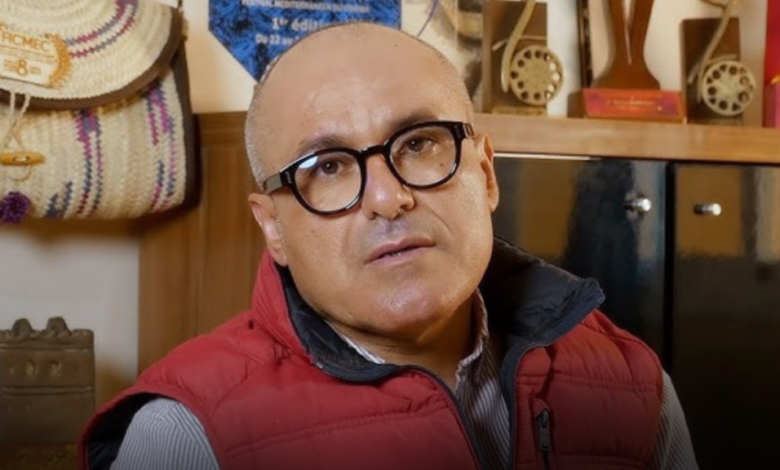
Mohamed Bouzaggou — artist, writer, screenwriter, and film producer — was born in 1966 in the Aith Said tribe, Dar Kebdani, in the province of Driouch. He holds a degree in private law, yet his deep passion for literature and art led him away from a legal career and into the world of creativity and writing. From his earliest beginnings, he established himself as a distinctive literary and artistic voice, building over decades a rich and wide-ranging body of work spanning the novel, short story, theatre, cinema, and television. Today, he has become one of the most prominent figures to have contributed to shaping the Amazigh cultural landscape of the Rif and Morocco at large.
Literary Career
Mohamed Bouzaggou’s literature was never a passing experiment — it was a genuine reflection of society’s concerns and the collective memory of place. He began his career by publishing novels and short story collections in the Amazigh language, a conscious choice that reflects his commitment to his cultural identity and his desire to document the people’s heritage of the Rif. Among his most notable literary works are the novel Bein Bein, in which he explores social contradictions; Walking on the Edge of the Gallows, which delves into the depths of human suffering; and the short story collection The Cave of Awna, which weaves together imagination and reality. He also published the play The Scarecrow and the novel A Life in a Grave, and crowned his literary journey with his most recent novel, Lwiza, Leave This Place!, which received widespread attention and was featured at the International Book Fair.
Cinematic Presence
Bouzaggou moved seamlessly from literary writing to screenwriting, leaving a clear imprint on Amazigh cinema as both a seasoned screenwriter and producer. He believes that cinema is not mere entertainment, but a tool for expressing identity and preserving collective memory — a conviction that is clearly reflected in his artistic choices and the themes of his films.
Among his most notable cinematic works is the film Salam and Dimitan, directed by Mohamed Amine Benaamraoui, which won the Grand Prize at the Martil Festival of Spanish-Moroccan and Latin American Cinema, Best Screenplay at the National Film Festival in Tangier, and the Grand Prize at the Amazigh Cinema Festival in Ouarzazate. He also produced prominent films including A Wedding on the Seashore, Kif Kif, The Old Man, The Vendor of Desire, and The Shoe Shiner.
The experience of Adios Carmen stands as one of the most significant milestones in his cinematic career: the film achieved remarkable international presence, earning a special mention from the jury of the Dubai International Film Festival, Best Screenplay at the African Cinema Festival in Khouribga, and the Grand Prize at the Black Screens Festival in Cameroon. The film Iperita followed, winning Best Screenplay at the National Film Festival in Tangier, before he went on to complete Thursday 1984, a film that evokes chapters from the region’s memory.
In the latest chapter of his creative journey, Mohamed Bouzaggou takes on a new artistic challenge — stepping into film direction with a project that brings to life the historical epic of Anwal, the great battle that shaped the identity of the Rif and immortalized the heroism of its people. The film, whose screenplay was written by Mohamed Nadrani, is considered one of the most ambitious Amazigh cinematic projects, carrying the mission of reviving a luminous page of Rif history through the power of image and cinema.
Television Work
Bouzaggou’s contribution was not confined to cinema; his creative output extended to television as well. He enriched the programming of Tamazight TV with numerous sitcoms and series that enjoyed widespread popularity, blending entertainment with cultural and social content.
Style and Artistic Vision
What sets Mohamed Bouzaggou apart from other creatives is his ability to bring together local particularity and a broad human perspective. He writes about the Rif — its people, its geography, its history — yet does so in an artistic language that transcends geographical boundaries and reaches audiences everywhere. He selects his subjects with great care, drawing them from lived reality and collective memory, and treats them with a style that combines intellectual depth with aesthetic sensibility.
Bouzaggou is regarded today as one of the most important authors and screenwriters to have contributed to making the cultural, social, and historical heritage of the Rif known through literature, image, and cinema. His works remain a living testament to an authentic human creativity rooted in the depths of Amazigh identity.