UK Honors Moroccan Professor Mimoun Azzouz for Excellence in Gene Therapy Research

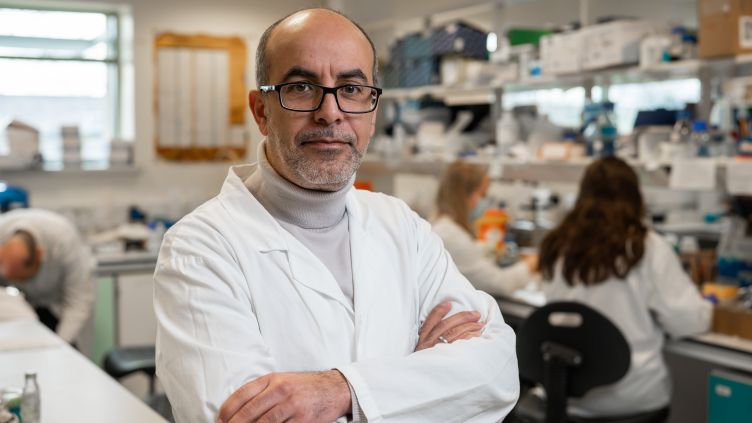
Professor Mimoun Azzouz, Director of the Gene Therapy Innovation and Manufacturing Centre at the University of Sheffield, has been awarded the “Excellence Award” by the British Society for Gene and Cell Therapy in recognition of his outstanding scientific career and contributions to advancing this critical field.
Azzouz is widely regarded as a leading figure in neuroscience and gene therapy research. His work focuses on translating laboratory discoveries into real-world treatments that can benefit patients, particularly those suffering from complex neurological disorders.
Since 2006, he has secured more than £34 million in research funding and led several major projects. Among his most notable contributions are studies on gene therapy for spinal muscular atrophy, which helped pave the way for advanced clinical trials and emerging treatments. He has also conducted significant research on Parkinson’s disease.
His scientific journey began in 1997 in Lausanne, Switzerland, before he later settled in the United Kingdom, where he continued his research career at the University of Sheffield. In addition to his research, Azzouz coordinates a broad network of 34 institutions and companies across Europe. He has also played a key role in mentoring the next generation of scientists, supervising dozens of students and researchers throughout his academic career.
Commenting on the award, Azzouz expressed pride in the recognition, describing it as the result of long-term collective effort. He also voiced optimism about the future of scientific research in Morocco, highlighting its ongoing development and growing potential.
This recognition marks another milestone in the journey of a Moroccan researcher from Morocco’s northern Rif region near Nador city who has established a strong international presence in one of the most advanced fields of modern medicine.
Gene therapy is an innovative medical approach that aims to treat diseases by correcting or replacing defective genes within a patient’s cells. This can be achieved either by introducing a healthy copy of a gene directly into the body or by modifying the patient’s cells in a laboratory before reintroducing them. The field relies on advanced technologies such as viral vectors and gene-editing tools like CRISPR, with the goal of addressing the root causes of genetic diseases rather than merely managing their symptoms.