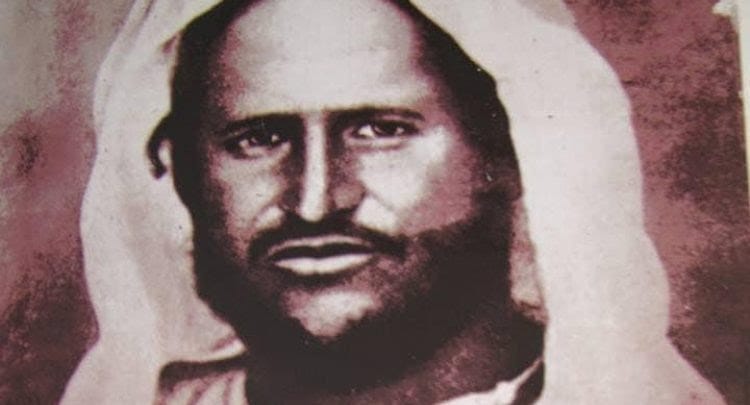
May 15th marked the anniversary of the martyrdom of Cherif Mohammed Ameziane, one of the most prominent leaders of the Moroccan resistance in the Rif region during the early twentieth century, who fell as a martyr in 1912 after years of armed confrontation against Spanish colonial expansion in the Rif.
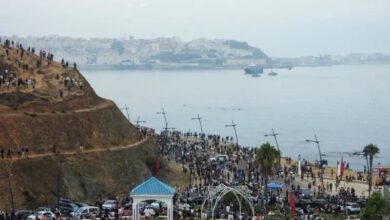
Cherif Mohammed Ameziane was martyred in the Ait Sidar area, part of the Beni Sidel Louta tribe near Nador, having led a fierce resistance against Spanish forces between 1909 and 1912, during which he fought in hundreds of confrontations in defense of land and dignity.
Cherif Mohammed Ameziane was born in 1859 in the Qal’iya region of the Rif, and belongs to the family of Awlad Ahmed Abd al-Salam al-Qal’i, which founded a religious zawiya in Zeghanghane near Nador. He received his early education in the mosque, as was the custom for the children of the Rif at that time, before turning to trade between the Rif and Algeria, where he gained extensive experience in dealing with people and traveling between regions.
Ameziane was known among the Rif tribes for his good character and reputation. He also served as a mediator in resolving disputes and overseeing collective agreements, which earned him widespread respect among the tribes of Qal’iya, Kebdana, and other areas of the Rif.
During that period, many young men from the Rif would travel seasonally to Algeria to work on the estates of French colonizers — journeys fraught with danger due to the crossing of the Moulouya River and the prevalence of highway bandits. Cherif Ameziane practiced what was known as Aztat, one of the traditional professions that accompanied and protected such caravans. He was trusted by the people thanks to his knowledge of the routes and his social standing.
Although he did not enter military and political life until after the age of fifty, the developments unfolding in the region pushed him to join the resistance against the Spanish occupation — particularly following the growing foreign interventions and the activities of Jilali al-Zerhouni, known as “Bouhmara,” who was colluding with colonial powers.
Many historical sources indicate that Cherif Ameziane was among the first Rif figures to warn of the danger posed by Bouhmara’s movements, and he contributed to mobilizing the tribes to confront and expel him from the region, after Bouhmara had caused disturbances and looted the property of the inhabitants.
In 1909, Cherif Ameziane traveled to the city of Fez as the head of a delegation of Rif leaders to seek support from the Moroccan Sultan in order to counter Spanish expansion and defend the region. However, the absence of that support led him to return to the Rif, where he worked to unite the tribes and launch the first stages of organized resistance against the occupation.
Many researchers, most notably the historian Hassan al-Fikiki, consider Cherif Mohammed Ameziane to have laid the foundations of modern Rif resistance, years before the emergence of Mohammed ibn Abd al-Karim al-Khattabi’s movement. He succeeded in uniting the tribes and leading the first Rif uprising against Spanish colonialism.
The name of Cherif Mohammed Ameziane remains present in the collective memory of the people of the Rif as a symbol of struggle and sacrifice, and as one of the figures who paved the way for an important phase in the history of Moroccan resistance. Yet the anniversary of his martyrdom often passes in media and public silence, without receiving the attention befitting his historical stature and his prominent role in the early resistance against Spanish colonialism in northern Morocco — especially when compared to certain other figures whose historical record is disputed, yet who receive far greater coverage and prominence in Moroccan collective memory.