Morocco’s Ancient Bilmawn Carnival Goes Global: Nine Countries, Five Days, One Living Heritage

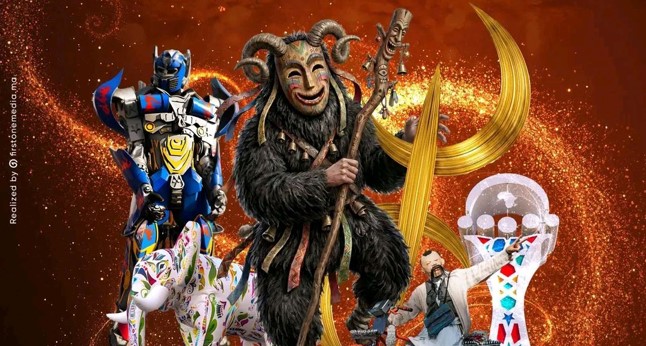
Culture & Heritage · Souss-Massa Region
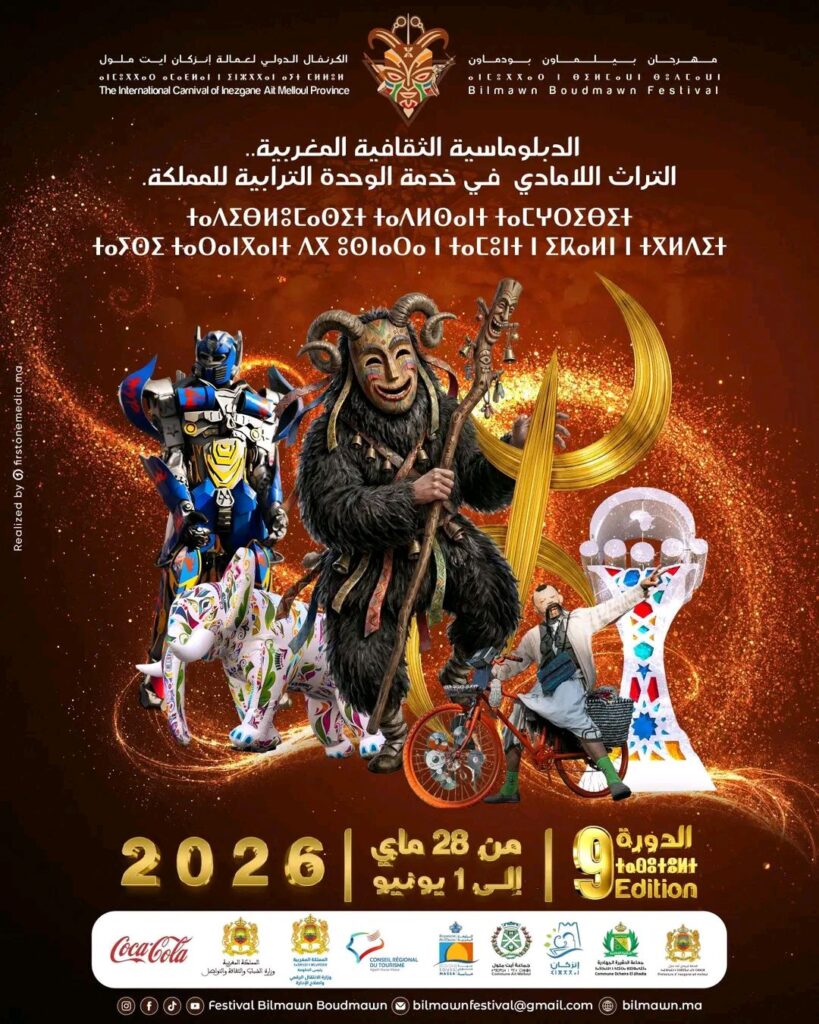
Inezgane Ait Melloul prepares to host the ninth edition of the International Bilmawn Carnival from May 28 to June 1, 2026 — a growing festival that blends ancestral Amazigh ritual with diplomatic ambition and cross-cultural celebration.
Cultural Event Inezgane Ait Melloul, Morocco · May 28 – June 1, 2026
Every year, as spring gives way to early summer in Morocco’s Souss-Massa region, the streets of Inezgane Ait Melloul fill with masks, drums, and the ancient rhythms of a tradition that predates written memory. The International Bilmawn Carnival — now in its ninth edition — has grown from a local cultural gathering into one of the country’s most significant intangible heritage festivals, drawing artists and delegations from across Morocco and beyond its borders.
| 9th Edition of the International Carnival | 5 Days of events across the region | 4+ International delegations | 2026 Theme: Cultural Diplomacy |
A Festival With a Mission: Culture as Diplomacy
This year’s edition carries a theme that signals the organizers’ broader ambitions: “Moroccan Cultural Diplomacy — Intangible Heritage in the Service of the Kingdom’s Territorial Unity.” It is a declaration that culture is not merely entertainment but a bridge between peoples, a soft-power instrument, and a vehicle for projecting Morocco’s civilizational identity on the world stage.
The choice of theme reflects a growing recognition within Morocco that its rich tapestry of living heritage — from Gnawa music to Amazigh festivals — carries weight far beyond its local context, resonating with international audiences and reinforcing the country’s multicultural identity.
Who Is Coming: An International Lineup
The ninth edition stands out for the breadth of its international participation. Artistic delegations from Bulgaria, France, Belgium, and the Canary Islands will join Moroccan troupes representing regions from across the kingdom, with a particular concentration of groups from the Souss-Massa region — the historical heartland of the Bilmawn tradition.
Participating Countries & Regions
| 🇧🇬 Bulgaria | International artistic delegation |
| 🇫🇷 France | International artistic delegation |
| 🇧🇪 Belgium | International artistic delegation |
| 🇪🇸 Canary Islands | International artistic delegation |
| 🇲🇦 Morocco | Multiple troupes from all regions, with emphasis on Souss-Massa |
Day by Day: Five Days of Celebration
| Day | Event |
|---|---|
| Thursday May 28 | Traditional Iswyas celebrations at Asayes Takmi Ofla, Ait Oubih, Al-Houri, and Tanaourt — an immersive opening rooted in local ancestral ritual. |
| Fri–Sat May 29–30 | Major evening performances at the Dcheira El Jihadia festival square and Inezgane Municipal Square, featuring leading artists and music groups representing the full spectrum of Moroccan artistic expression. |
| Sunday June 1 | The Grand Carnival Parade along Mohammed V Avenue — the main artery linking Dcheira El Jihadia and Inezgane — with national and international troupes in full costume, celebrating the Bilmawn Boudmawn heritage. |
| Monday June 2 | Closing carnival parade in the city of Ait Melloul, extending the festivities and bringing the celebration closer to new audiences across the wider municipality. |
“The Bilmawn Carnival is not a spectacle designed for tourists — it is a living practice, passed down across generations, that happens to welcome the world. That is precisely what makes it extraordinary.”
What Is Bilmawn? The Tradition Behind the Festival
Bilmawn — sometimes spelled Bilmawen or Boujeloud — is one of the oldest surviving ritual practices in the Amazigh cultural tradition, historically associated with the days following Eid Al-Adha. The central figure is a man cloaked in freshly slaughtered animal skins, representing a liminal being who moves between the human and spirit worlds, driving away evil and blessing the community through dance, song, and theatrical performance.
Over centuries, the practice has evolved and absorbed influences from the diverse communities of the Souss region, giving rise to a rich repertoire of masks, costumes, musical forms, and narrative traditions unique to specific villages and valleys. The Inezgane carnival has made it its mission to document, celebrate, and project this heritage — transforming a deeply local ritual into a window onto Moroccan civilization for global audiences.
Beyond Culture: Economic and Tourism Impact
The organizers are clear that the carnival’s ambitions extend beyond cultural preservation. As a platform for creative industries, the event generates measurable economic activity across the region — from hospitality and catering to artisan markets and local transport. Its growing international profile positions Inezgane Ait Melloul as a destination on Morocco’s cultural tourism map, attracting visitors who combine the festival experience with broader exploration of the Souss-Massa region and the nearby city of Agadir.
The general public, tourists, and national and international media are all invited to attend and cover this edition, which promises to be the most ambitious in the carnival’s nine-year history.