Unemployment Crisis in Nador and Driouch Raises Questions Despite Billions in Investments

NADOR, Morocco — Figures attributed to Morocco’s High Commission for Planning (HCP) reveal concerning employment indicators in the eastern Rif region, where the employment rate reportedly stands at just 31.3% in Nador and 31.5% in Driouch. The figures raise important questions about whether major infrastructure and investment projects will translate into meaningful employment opportunities for local residents, particularly young people.
According to the reported data, approximately 31 out of every 100 people in the population group used to calculate the employment rate are employed in the two provinces, highlighting the economic and social challenges facing the region.
However, it is important to distinguish between the employment rate and the unemployment rate. These figures do not mean that nearly 69% of residents are unemployed. The population not counted as employed also includes students, retirees, and economically inactive individuals.
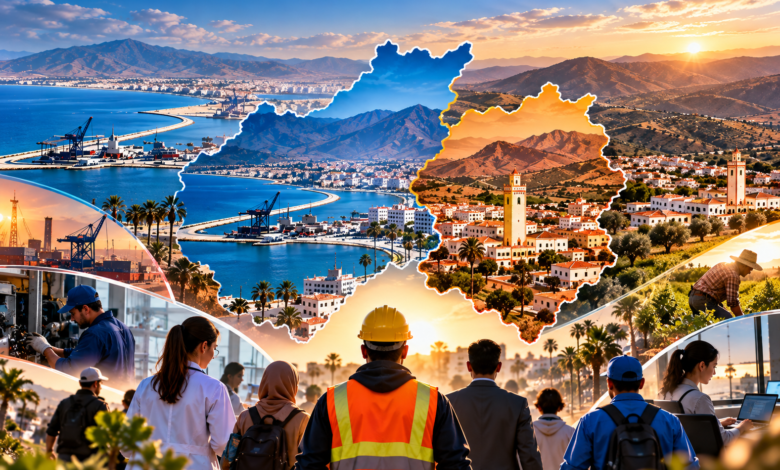
The figures come at a time when Nador is undergoing significant economic transformation, driven by major infrastructure developments, including the Nador West Med port project, alongside tourism, industrial, and logistics investments expected to strengthen the region’s economic potential.
Yet the scale of these investments raises questions about their actual impact on the local labor market. Will new businesses and infrastructure projects create sufficient employment opportunities for local residents, especially young job seekers, university graduates, and vocational training graduates?
The contrast between ambitious investment projects and low employment rates also highlights the need for public policies that directly connect economic development with job creation. Greater emphasis on training local workers, developing professional skills, and supporting small and medium-sized businesses could help ensure that residents of Nador and Driouch benefit from the region’s economic transformation.
A central challenge remains whether these projects can move beyond construction and investment phases to generate permanent, stable jobs that improve household incomes and reduce economic vulnerability.
For many residents of the eastern Rif, the issue is not simply how much money is being invested, but who will ultimately benefit from it.
As billions of dirhams are directed toward transforming the region’s economy, one fundamental question remains: Will these investments create real jobs for the people of Nador and Driouch, or will economic development continue to remain beyond the reach of many local families?