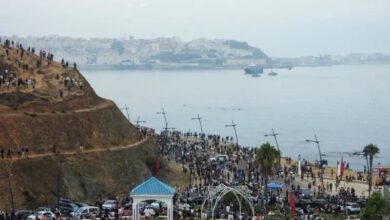
In just a few years, Nador has transformed from a quiet city on the shores of the Mediterranean Sea into an open construction site in every direction. The question is no longer merely whispered but is now openly discussed in the corridors of Oujda: Is the economic power map of the Eastern region being redrawn?
No one denies that for decades, Oujda was the city around which the Eastern region revolved, for many reasons—some linked to developmental realities, others imposed by central government decisions that made Oujda the region’s primary center of gravity. However, the landscape has begun to change rapidly, and with each new strategic project hosted by Nador, the contours of a new phase are emerging, one that redraws the balance of power within the region.
On the logistical front, the Nador West Med port represents a truly strategic undertaking. This is not an ordinary local project, but a major economic platform that will reshape Morocco’s position on the maritime trade map of the Mediterranean basin. Yet, Oujda was present even in the first steps of benefiting from the project, after the West Med Container Terminal company, the main operator of the port’s container terminal, chose to organize open recruitment days in the city of Oujda instead of Nador. This choice has brought back to the fore questions about the extent to which the host province of the port actually benefits from the opportunities it offers, and about the continued concentration of some activities and services linked to Nador’s projects in other cities, even though the project was fundamentally established to be a lever for local and regional development.
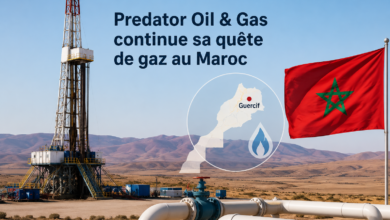
Alongside it, the Beni Ensar port continues to solidify its position as one of the most active ports not only in Morocco but even globally, with increasing direction from international maritime shipping companies toward it amid the unstable conditions facing the world. On the geographical connectivity front, the Guercif–Nador highway project will bring about a qualitative shift in the city’s relationship with its surroundings. A direct connection to the national network, bypassing Taourirt, translates in investment terms to reduced costs and a broader economic appeal.
“It is not about taking a role from one city to give it to another, but rather about the multiplication of poles within a region that was in dire need of this multiplicity to begin with.”
In healthcare, the inauguration of a new hospital center in Nador, in addition to the transformation of Al-Hassani Hospital into a specialized cancer treatment center, represents a step of deep symbolic and social significance. Patients from Nador and neighboring provinces were previously forced to travel hundreds of kilometers to Oujda for treatment. Today, this service is expected to be provided in their own hometown, saving them expenses that often exceeded their financial means.
In air transport, the mere diversion of some European flights from Oujda Angad Airport to El Aroui Airport was enough to stir a state of alarm in Oujda, which ended with the establishment of a coordination body demanding the reinstatement of the cancelled routes. The coordination body affirmed that the decision imposes additional costs and hardship on travelers, especially families, the elderly, and the sick, calling on airlines and relevant authorities to review this decision and restore the status of Oujda Angad Airport. Many interpreted this as an indicator of growing fears about the transfer of part of the economic and service weight toward Nador, amid the rapid transformations the region is witnessing.
In addition, there is the major sports project of the new stadium in Nador, which enhances the city’s chances of hosting national and international sporting events, most notably the 2030 World Cup. The city also benefits from an important demographic and economic asset: the large, established Rifian diaspora community in various European countries, which for decades has been one of the most prominent drivers of the local economy and a primary source of investment and remittances in the region.
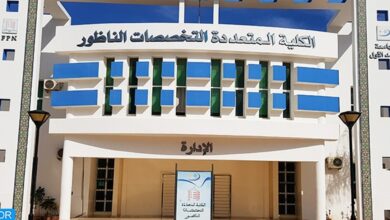
Perhaps the most striking aspect of this transformation is what has ocurred at the university level. In May 2026, the project to divide the Multidisciplinary Faculty of Nador into four independent and specialized university institutions was approved. On the surface, the decision may seem like a mere academic restructuring, but deep down it carries a greater significance: Nador is no longer just a city that sends its children to Oujda to pursue their studies; rather, the foundations of an integrated university hub are being built within it, capable of attracting students and offering specializations that were once exclusive to other cities. This is a step that reflects Nador’s transition from a subordinate position to an active one, and from the margins of the university map to one of its rising centers in the Oriental region. This transformation will gradually reduce the flow of thousands of students toward Oujda, which may impact one of the economic tributaries that the city has benefited from for decades, as students constituted an important source of commercial activity, the rental market, and services associated with university life.
These combined data points—from ports to highways, from hospitals to university institutions—do not reflect mere sporadic improvements or isolated projects. Rather, they reveal an integrated developmental path that gradually repositions Nador within the Eastern region. It is also difficult to ignore the fact that the city has now begun to attract major strategic projects, and that the transformations it is witnessing are no longer just promises or expectations, but a new reality taking shape on the ground, redrawing the development balances within eastern Morocco.
However, the real question should not be framed as a competition between one city and other. Development is not a match between Nador and Oujda, but a collective endeavor concerning the future of the entire region. While Oujda retains its academic, administrative, and historical assets accumulated over decades, Nador continues to build renewed economic, logistical, healthcare, and academic strengths. The Eastern region will lose nothing if its developmental poles multiply; rather, it will gain more if this integration is well managed in a way that serves the interests of the region and all its inhabitants.
The question remains today: Is Oujda experiencing genuine fear that the economic and academic center of gravity of the Eastern region is shifting toward Nador? Or is what is happening nothing more than a long-overdue correction of a historical imbalance, and an act of justice toward a city that has lived in the shadows for decades despite its great economic and human potential, and despite the significant revenues it generated for the national economy? Between those who see Nador’s rise as a threat to Oujda’s status and those who consider it a restoration of a lost balance within the region, the truth seems closer to a redrawing of the development map of eastern Morocco, in line with the economic and strategic transformations the region is witnessing.