How the Rif Diaspora in the Netherlands Is Changing Its Relationship with Property in Morocco

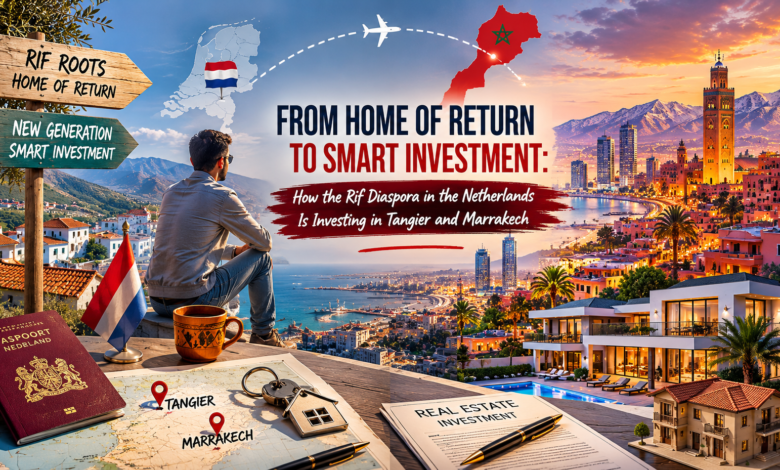
For decades, owning a home in Morocco was a main goal for many Moroccan migrants in the Netherlands—especially those originally from the Rif region. It was more than real estate. It was a promise: the idea of one day going back, settling down, and reconnecting permanently with the place they left behind.
A recent study, “Migrants of Moroccan Origin, Country of Origin and Future Perspectives,” by researchers Rachid Bahl and Dick de Ruiter, shows that this long-standing vision is now changing in a fundamental way.
The old model: building for return
For the first generation of migrants, buying land or building a house in Morocco was closely tied to the idea of return. Many invested in their hometowns—places like Nador, Al Hoceima, and Driouch—not just as financial assets, but as emotional anchors. These houses represented success abroad, but also continuity with family roots and a future retirement back home.
In that sense, property was never just property. It was part of a life plan built around migration being temporary.
A shift in mindset across generations
That model is now fading among younger generations. Children and grandchildren of migrants are less likely to see Morocco as a place they will eventually resettle in. Instead, their relationship with the country is becoming more flexible, more mobile, and more economically driven.
The study highlights a clear shift: real estate is no longer primarily about “going back,” but about “making use of opportunities.”
From villages to investment cities
This change is also visible in where people choose to invest. While earlier generations focused on ancestral villages in the Rif, younger investors are increasingly drawn to major urban centers—especially Tangier and Marrakech.
These cities offer different advantages. Tangier benefits from rapid infrastructure growth and its strategic economic position, while Marrakech attracts strong tourism flows and a booming short-term rental market. For many in the diaspora, these factors make them more attractive than rural property tied to family origin.
Not a break with identity, but a new form of connection
Despite this shift, the study stresses that emotional ties to the Rif have not disappeared. The connection remains strong, but it is being expressed differently.
Rather than being centered on permanent return, identity is now maintained through visits, family links, and selective investments. Property becomes part of a broader portfolio of transnational life rather than a final destination.
A hybrid future
Ultimately, the study paints a picture of transformation rather than rupture. The Rif diaspora in the Netherlands is not abandoning its roots—it is reinterpreting them.
What is emerging is a hybrid approach: part emotional attachment, part economic strategy. And in this new landscape, cities like Tangier and Marrakech are becoming key points of connection between heritage and opportunity.