This interview has been edited for clarity and length.
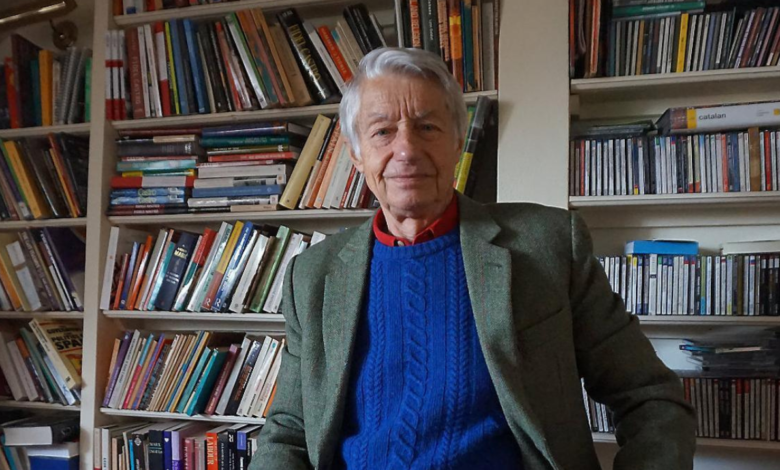
British historian Sebastian Balfour, Professor Emeritus of Contemporary Spanish Studies at the London School of Economics and author of Deadly Embrace: Morocco and the Road to the Spanish Civil War, has spent years studying the Rif War and its consequences. In this Rfm conversation, Nounja speaks with Balfour about Spain’s use of chemical weapons against Rifian civilians, the political silence surrounding that history, the possible long-term health effects, and why he believes new community research is urgently needed.
Q&A
Nounja, Rfm: What first drew you to research Morocco and the Rif War?
Sebastian Balfour: My interest began with a gap in the literature. I found very little about the effect of the Moroccan colonial war, especially the Rif War, on the Spanish Civil War. Yet the connection was profound. Many men who later fought in Spain had first fought in Morocco, and some Rifian veterans moved through both conflicts in ways that are still not well understood.
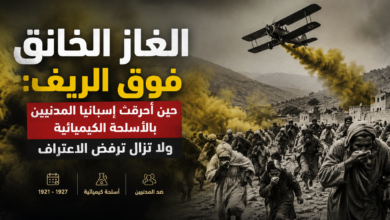
The Rif War that most concerned me was the war from 1921 to 1927. When I gained access to Spanish military archives, and later worked through French and British archives, I found documents that helped reconstruct Spain’s chemical war in the Rif. The most devastating phase was the use of mustard gas from 1924 onward. That discovery pushed me further into the research.
Nounja, Rfm: Many people know Abdelkrim El Khattabi and the Rif Republic, but less about the chemical attacks. Why is this history still so little known?
Balfour: There are several reasons. France and Britain knew about the chemical weapons, and they sent observers because their armies were interested in what was happening. But Spain carried the main responsibility for one of the worst atrocities of that period, and it was not widely confronted afterward.
In Spain, the Civil War produced a culture of silence. After the dictatorship, the transition to democracy involved an agreement not to reopen much of the past. Mass graves remained closed, torturers from the Franco period were not brought to trial, and painful memories were left buried. That wider silence also affected the memory of the Rif War.
In Morocco, the issue is complicated for another reason. The Rif War was fought against Spain, but also against the Moroccan state of the time. Abdelkrim’s Rif Republic stood for Rifian independence, and the Sultan’s forces fought against him. That makes the history uncomfortable for official narratives that present the war only as a patriotic Moroccan struggle.
Nounja, Rfm: What did the Spanish archives show about the weapons used?
Balfour: The documents gave detailed information about the types of bombs used, where they were dropped, and on which days. Mustard gas was used from 1924 onward with German assistance, including supplies connected to stockpiles and expertise left after the First World War. Other agents were also used, including phosgene, diphosgene, and chloropicrin.
The aim was not only to attack fighters. Spanish strategy targeted the civilian base of Rifian resistance: markets, villages, water sources, animals, crops, and the landscape that sustained everyday life. The purpose was to break the social and economic foundations that allowed resistance to continue.
Nounja, Rfm: What were the human consequences of mustard gas in the Rif?
Balfour: The immediate effects were terrible: lung damage, throat injuries, burns, and other wounds caused by contact with the gas. But the most disturbing question is the possible long-term and intergenerational effect. Mustard gas has been linked in other contexts to genetic damage, cancer, and birth defects.
In my work, I examined figures from a children’s cancer hospital in Rabat and compared them with the operational diary of the Spanish army. The concentration of cancer cases from northern Morocco, and especially areas corresponding to bombardment zones, raises serious questions that deserve scientific investigation.
I do not claim that every case can be individually proven without further research. But the pattern is significant enough that it should not be ignored. Families in the Rif have many stories of relatives dying from cancer, often without diagnosis, documentation, or public recognition.
Nounja, Rfm: Do we know what happened to the land, animals, and agricultural life?
Balfour: The target was the Rifian way of life. Mustard gas could contaminate water, affect animals, and penetrate materials. Civilians were not only attacked as individuals; their means of survival were attacked. In a rural society, destroying animals, crops, and water sources was a way to force surrender.
That is why this history should not be treated only as a military question. It was an assault on a society’s ability to live, farm, move, and survive. The effects were not limited to the battlefield.
Nounja, Rfm: How important were chemical weapons in defeating the Rif Republic?
Balfour: The decisive factor was the combined Spanish and French military campaign, supported by the Sultan. But chemical weapons were fundamental in weakening civilian support for Abdelkrim. Rifian fighters could sometimes evade aircraft by sheltering in caves, especially once warning systems developed. Civilians in markets and villages could not do the same.
Without chemical weapons, the war would still have been very difficult for the Rif because France and Spain eventually coordinated their forces. But chemical warfare accelerated the destruction of the civilian base of resistance.
Nounja, Rfm: What did your interviews with Rif War veterans reveal?
Balfour: They brought the personal dimension of the war into focus. I interviewed veterans who had fought against Spain in the Rif and later fought for Franco’s Nationalists in the Spanish Civil War. That seems contradictory until you hear their explanation. One veteran, more than 100 years old, explained it through hunger. The Spanish Nationalist army offered money, food, and the possibility of loot. For people living in poverty after the devastation of the Rif War, that mattered.
I also interviewed a Spanish veteran who had fought in Morocco and later fought for the Spanish Republic. These men had faced each other across two wars, sometimes on different sides. Their stories show how colonial violence in Morocco fed directly into Spain’s later conflict.
Nounja, Rfm: What did your research teach you about Abdelkrim El Khattabi?
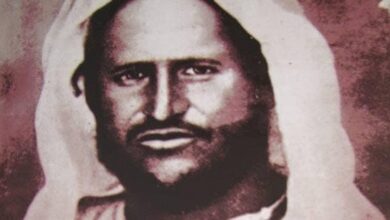
Balfour: Abdelkrim was highly pragmatic. At first, he saw European capital and Spanish presence as possible routes toward modernization. But he changed his position when it became clear that Spain was not modernizing the Rif for its people; it was building infrastructure to extract minerals and deepen colonial control.
He became a brilliant organizer and military strategist. He knew how to negotiate between tribes and build a coalition capable of challenging Spain. I admire him, but he was also a man of his time, shaped by a culture of inter-tribal warfare. Any serious history must recognize both his extraordinary leadership and the violence of the period in which he operated.
Nounja, Rfm: What should be done now to pursue accountability and justice?
Balfour: The most urgent step is documentation. Young people in the Rif could organize community research, interview families, record cancer histories, identify villages affected by bombardment, and build a body of evidence. That work must be careful, but it is essential.
There have already been efforts by Rifian organizations and by lawyers in Europe to raise the question of reparations. In Spain, attempts have been made to bring the issue before parliament, but they have not succeeded. A stronger base of testimony and medical data would make it harder to ignore.
This is not only about the past. It is about families who still carry the memory of unexplained deaths, poverty, silence, and trauma. The Rif needs recognition, research, and justice for what was done to its people.